




Image via Snethkamp CDJR.
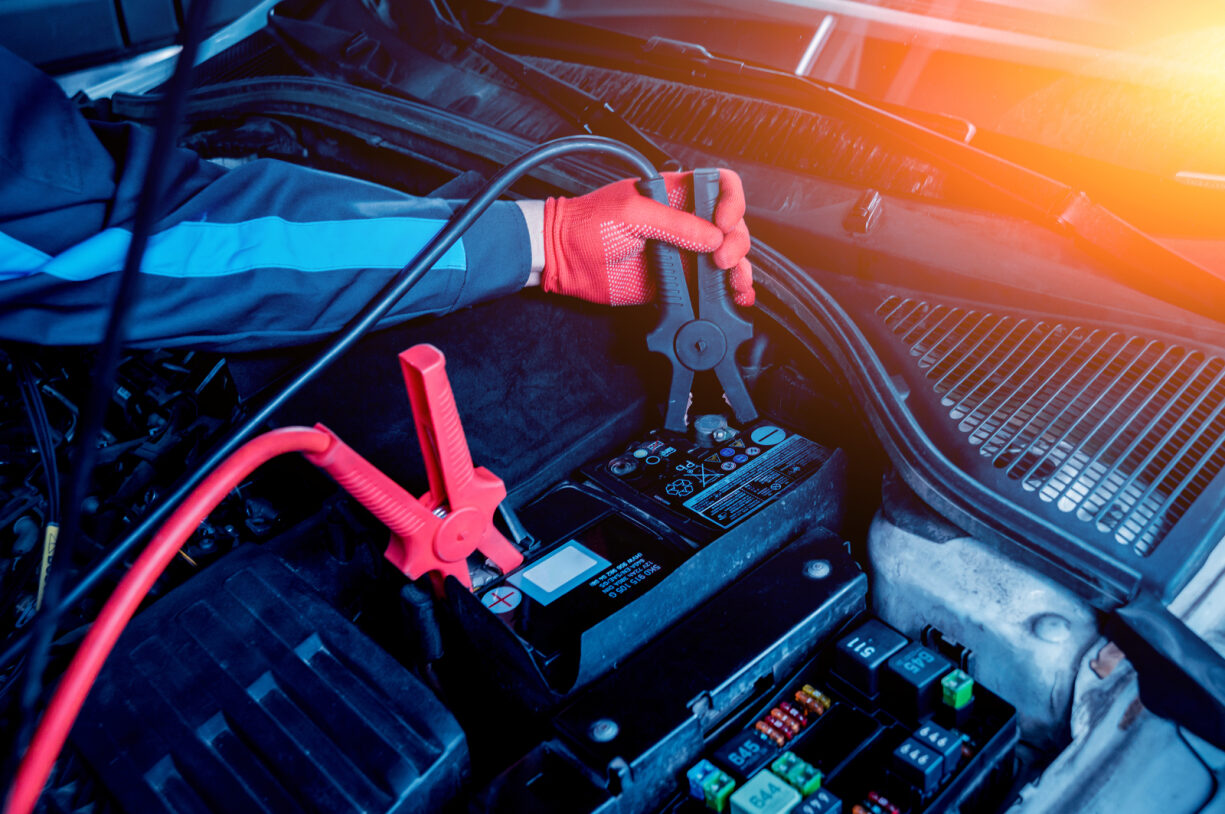
The battery is one of your Jeep’s most important components but is also one of the shortest-lived. A failing battery can make starting more difficult or prevent your Jeep from starting at all. As your Jeep dealer, we want to tell you more about some signs you need to visit us for a new car battery.
Old Battery
One of the main causes of battery failure is age, as the average life of a battery is three to five years. This short life is due to the breakdown of the chemicals inside the battery. These chemicals, particularly sulfuric acid, are essential for the battery to store and supply electricity. As the chemicals weaken, the battery’s storage capacity drops, and recharging becomes more difficult.
While we can’t prevent the battery from weakening, we can test it to determine its remaining life. We advise testing your battery once a year, starting from the third year. Our technicians will connect your battery to our computerized battery tester. This tester subjects the battery to various tests to identify any weaknesses. If it fails the test, we can install a new battery in minutes.
Battery Warning Light
The battery warning light illuminates due to any issue that affects the electrical system. Each component in the system has a sensor connected to it, and these sensors monitor their connected components for signs of trouble. The sensors can detect minute changes in the behavior of the components, allowing you time to get them checked or replaced.
This light could mean your battery is tweaking, but it could also signal issues like a failing alternator, damaged wiring, or a blown fuse. If you experience random electrical glitches or dim headlights when the engine is switched off, a failing battery is the most likely culprit. We’ll investigate and repair or replace the cause of the problem.
Battery Corrosion
As we saw above, the chemicals inside a battery gradually break down. As the sulfuric acid breaks down, it releases hydrogen gas. The hydrogen molecules will escape the battery case and enter your engine. They combine with sulfur molecules, released into the engine due to the presence of fuel, and form hydrogen sulfide.
Hydrogen sulfide is a corrosive chemical and is drawn to the battery terminals. This chemical forms an acidic salt around the terminals and corrodes them. The corrosion weakens the battery even further as it greatly reduces recharging rates. We can clean the corrosion, but it will continue to return if the battery fails. Once we replace the battery, the corrosion will stop.
A weak battery could fail you when you least expect it. Visit our service department today at Snethkamp CDJR in Redford, MI.
Connect with us


- June 2026
- May 2026
- April 2026
- March 2026
- January 2026
- December 2025
- November 2025
- October 2025
- September 2025
- August 2025
- July 2025
- June 2025
- May 2025
- April 2025
- March 2025
- February 2025
- January 2025
- December 2024
- November 2024
- October 2024
- September 2024
- August 2024
- July 2024
- June 2024
- May 2024
- April 2024
- March 2024
- February 2024
- January 2024
- December 2023
- November 2023
Archives
- 2025 Model Year
- 2026 Chrysler Pacifica
- 2026 Dodge Charger
- 2026 Jeep Gladiator
- 2026 Jeep Gladiator
- 2026 Jeep Wagoneer
- 2026 Jeep Wrangler
- 2026 Model Year
- 2026 Ram 1500
- Brake service
- CPO
- Driver Assistance
- Durango
- Engine
- Grand Wagoneer
- New Chrysler Vehicles
- New Dodge Cars
- New Jeep Vehicles
- New RAM Trucks
- Performance
- Redford Chrysler Dealership
- Redford Dodge Dealership
- Redford Jeep Dealership
- Redford MI
- Redford RAM Dealership
- Redford Service Department
- Safety Features
- Snethkamp CDJR
- Snethkamp CDJR Redford service
- Snethkamp CDJR Service
- SUV
- Technology
- Uncategorized
- Used Cars